Dental implants are a permanent tooth replacement option that uses a small titanium implant placed in the jawbone to support an artificial replacement tooth.
They are recommended for patients missing one or more teeth who have sufficient jawbone support. Suitability is carefully determined through a comprehensive clinical exam and diagnostic imaging before any treatment planning begins.
Complete Guide to Dental Implants- Tooth Replacement Guide
Losing a tooth can deeply impact your daily life, altering how you chew, speak, and smile. If you are researching a missing tooth replacement or asking where can I find an implant dentist near me, you are taking an incredibly important step toward restoring your oral health and self-confidence. At Waterdown Smiles Dentistry, our compassionate clinical team understand the emotional and physical toll of tooth loss. We are dedicated to providing permanent, stable solutions in a comfortable environment.
We proudly offer comprehensive dental implants to patients across Waterdown, Aldershot, Hamilton, Dundas, Flamborough, and Carlisle. This complete guide is designed to walk you through exactly how dental implants work, who makes a good candidate, and how our structured, patient-focused approach can help you regain a fully functional smile.
To make this information easy to digest on your phone or tablet, we have broken down every section so you know exactly what to expect from your restorative journey.
Your Blueprint for a Complete Smile
-
Permanent Replacement: Implants act as artificial tooth roots, providing a stable, permanent foundation for your new replacement teeth.
-
Comprehensive Options: We offer a versatile range of treatments, including single-tooth implants, multiple implants, and implant-supported bridges or dentures.
-
Health and Stability: Implants rely on and help preserve sufficient jawbone support, successfully restoring natural chewing and appearance.
-
Staged Treatment: The procedure is completed in careful stages to allow for proper healing and bone integration.
-
Comfort-Focused Care: Placements are performed under local numbing or sedation, with patient comfort prioritized throughout the entire process.
What are dental implants and how do they work?
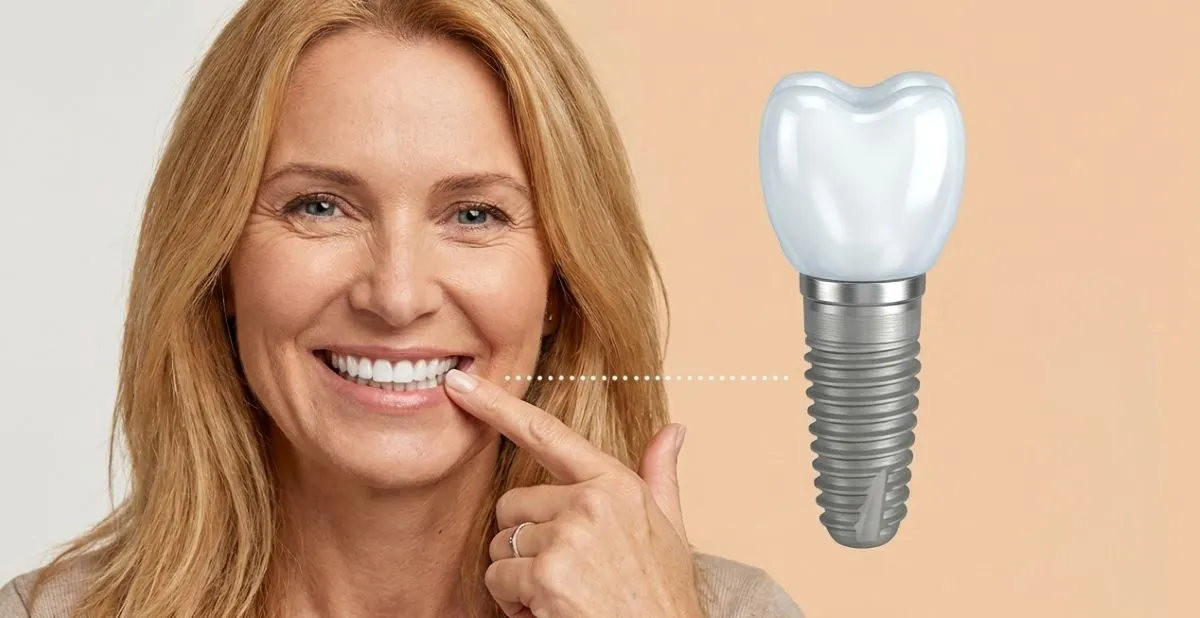
A dental implant is a permanent tooth replacement option utilizing a small titanium implant that is surgically placed into the jawbone. It acts as an artificial root that securely supports a custom artificial replacement tooth, effectively restoring your chewing ability, appearance, and overall dental stability.
When patients ask, what are dental implants and how do dental implants work, the easiest way to understand them is to look at the anatomy of a natural tooth. A natural tooth has two main parts: the visible crown above the gumline and the hidden root in the jawbone that holds the tooth securely in place. When you lose a tooth, you lose both parts. A tooth implant is designed to replicate that entire structure.
Here is how the system works together to rebuild your smile:
-
The Titanium Implant: Made of biocompatible titanium, this small post is placed directly into the jawbone to act as your new, artificial tooth root.
-
Natural Integration: The human body naturally accepts titanium. Over time, the jawbone heals around it, locking the implant firmly into place.
-
The Abutment: Once healed, a small connector piece is attached to the top of the implant to hold the new tooth.
-
The Custom Crown: Finally, a custom-made artificial tooth is securely attached, creating a restoration that looks, feels, and functions remarkably like your natural teeth.
Who is a good candidate for dental implants?
Dental implants are typically recommended for adult patients missing one or more teeth who possess sufficient jawbone support to hold the implant securely. Suitability is always assessed through a comprehensive clinical exam and diagnostic imaging prior to treatment.
While dental implants are often considered the gold standard for tooth replacement, they do require a specific clinical foundation to be successful. If you are searching for dental implants near you in Waterdown, your journey will always begin with an in-depth consultation. We want to ensure that your mouth is healthy enough to support this advanced restoration.
During this comprehensive visit, we evaluate several critical factors:
- Missing Teeth: Whether you are missing a single tooth, several teeth, or an entire arch, implants can be adapted to your unique needs.
- Sufficient Jawbone Support: The titanium implant must be anchored in solid, healthy bone. We use advanced diagnostic imaging to accurately measure your bone density and volume.
- Overall Oral Health: Your gums must be healthy. If active periodontal (gum) disease is present, it must be treated and managed before an implant can be safely placed.
- Commitment to Hygiene: Good candidates understand that long-term success requires excellent at-home oral care and regular dental checkups.
What types of dental implants are available?
We offer several types of implants tailored to your specific needs, including single-tooth dental implants, multiple implants for several missing teeth, and implant-supported bridges or dentures. The specific type is selected based on your bone health, the location of the missing teeth, and your restorative needs.
Because every patient’s mouth is wonderfully unique, the restorative solution must be equally customized. At Waterdown Smiles Dentistry, we do not believe in a one-size-fits-all approach. We offer a versatile range of implant solutions, and the options are always explained clearly to you before any treatment begins.
Depending on your clinical needs, your customized plan may include:
-
Single-Tooth Dental Implants: Ideal if you are missing just one tooth. A single titanium post supports a single custom crown, leaving the adjacent healthy teeth completely untouched.
-
Multiple Implants: If you are missing several non-adjacent teeth, multiple individual implants can be strategically placed throughout the mouth.
-
Implant-Supported Bridges: If you are missing several teeth in a row, placing an implant for every single missing tooth is often unnecessary. Instead, two implants can be placed at either end of the gap to securely support a multi-tooth dental bridge.
-
Implant-Supported Dentures: For patients missing an entire arch of teeth who struggle with loose, shifting traditional dentures. A select number of implants can be placed to allow a full denture to “snap” securely into place, providing life-changing stability.
What does the dental implant procedure involve?
The dental implant procedure is typically completed in stages. It involves the surgical placement of the implant under local numbing or sedation, a healing period for the implant to integrate with the bone, and the final attachment of the custom replacement tooth.
Many patients experience anxiety regarding dental surgery. Our approach focuses on complete transparency and reducing friction by ensuring you understand every step of the process. We prioritize your comfort from the initial consultation to the final smile reveal.
Here is a step-by-step breakdown of what the process involves:
- Initial Placement: After your clinical exam and imaging, the titanium implant is carefully placed into the jawbone. The procedure is performed under local numbing, and sedation options are available for those who experience dental anxiety.
- Healing and Integration: This is a crucial stage. The implant is left to heal, allowing a process called osseointegration to occur, where your natural jawbone fuses directly to the titanium surface to create a permanent anchor.
- The Abutment Phase: Once successful integration is confirmed, a small connector piece (abutment) is attached to the top of the implant.
- Final Restoration: Finally, your custom-crafted artificial replacement tooth (crown, bridge, or denture) is secured to the abutment, completely restoring your smile.
Is getting a dental implant painful?
While it involves minor surgery, patient comfort is prioritized. During the procedure, you are fully numb or sedated. During recovery, most patients experience only mild to moderate discomfort, which is effectively managed with medication and detailed aftercare guidance.
It is incredibly common for patients to search, are dental implants painful. We want to reassure you that managing your comfort is our top priority, and the experience is often much more manageable than patients anticipate.
Here is what you should expect regarding your comfort and recovery:
- During the Procedure: You will not feel sharp pain. The placement is performed under profound local numbing or appropriate sedation so you remain completely comfortable.
- Early Recovery: As the numbing wears off at home, temporary swelling or soreness is expected. This is a very normal part of the body’s natural healing process.
- Pain Management: Dr. Luka will ensure that your pain is managed with appropriate medication and clear, easy-to-follow aftercare instructions.
- Continuous Monitoring: Your recovery timeline will be explained in advance, and follow-up visits are scheduled to closely monitor your healing and ensure you remain comfortable.
How long do dental implants last?
Short Answer: Dental implants are designed to be a permanent tooth replacement option. Their exact longevity is heavily influenced by your daily oral hygiene, your overall bone health, and maintaining regular dental visits to monitor the implant-supported restorations over time.
When patients ask how long do dental implants last, we explain that the titanium post itself has the potential to last a lifetime. Because it fuses directly with your jawbone, it becomes a permanent, structural part of your anatomy.
However, the long-term success of the implant depends heavily on your habits and oral care:
- Oral Hygiene: Just like natural teeth, implants require excellent hygiene. Gum disease (peri-implantitis) can cause bone loss around an implant, which can eventually lead to failure.
- Bone Health: Maintaining strong, healthy bone is essential for the stability of the implant.
- Regular Checkups: Daily brushing and flossing must be paired with regular professional cleanings at our Waterdown clinic.
- Monitoring Restorations: While the implant post is permanent, the crown or denture attached to it may experience normal wear and tear over the years. Regular visits allow us to monitor these restorations and ensure long-term success.
Dental implants vs bridges vs dentures
If you are missing teeth, you have choices. When deciding between a tooth implant near me, a traditional bridge, or dentures, it helps to understand how they differ structurally. We provide this comparison during your consultation to discuss long-term value and stability clearly.
Each option serves a unique purpose, and the best choice is always determined by your clinical needs and personal preferences:
- Dental Implants: These act as standalone replacements. Because they are anchored in the bone, they provide unparalleled stability and help prevent the jawbone from shrinking over time.
- Crowns and Bridges A dental bridge is highly effective but requires the natural teeth on either side of the gap to be altered and capped to support the artificial replacement tooth.
- Dentures Traditional dentures are removable replacements that rest on top of the gums. While they replace multiple teeth affordably, they can sometimes shift during eating or speaking if not supported by implants.
Tooth Replacement Comparison
| Tooth Replacement | Key Feature |
|---|---|
| Dental Implants | A titanium implant placed in the bone supporting an artificial tooth; does not rely on adjacent teeth. |
| Dental Bridge | A replacement tooth that is supported by altering and capping the adjacent natural teeth. |
| Dentures | A removable replacement for missing teeth that rests on the gums. |
What affects dental implant cost in Canada?
Short Answer: The dental implants cost varies based on the number of implants required, the clinical complexity of your case, and the specific type of restoration (crown, bridge, or denture) being attached.
We believe in complete financial transparency to reduce any anxiety associated with your care. Because implant dentistry is a highly customized medical procedure, there is no single flat rate. Your investment depends on your specific clinical needs.
During your consultation, we will clearly discuss all of the factors that influence your investment:
- Number of Implants: Replacing a single tooth involves a different cost structure than placing multiple implants to support a full arch.
- Treatment Complexity: If you require bone grafting to build up sufficient jawbone support prior to placement, this will affect the overall scope of treatment.
- Restoration Type: The final cost includes whether we are attaching a single crown, a multi-tooth bridge, or an implant-supported denture.
- Insurance Review: If you have dental insurance, our administrative team will help review your coverage when applicable. We ensure the long-term value and stability of the treatment are discussed clearly so you can make an empowered decision.
Frequently Asked Questions (FAQs)
What are dental implants and how do they work?
Dental implants are a permanent tooth replacement option. They utilize a small titanium post placed directly into the jawbone to act as an artificial root. Once healed, it securely supports a custom artificial replacement tooth.
Who is a good candidate for dental implants?
They are recommended for adult patients missing one or more teeth who have sufficient jawbone support and healthy gums. Suitability is carefully assessed through a clinical exam and digital imaging.
What types of dental implants are available?
We offer single-tooth dental implants, multiple implants for several missing teeth, and implants designed to securely support dental bridges or full dentures. The type is selected based on your bone health and restorative needs.
What does the dental implant procedure involve?
The procedure is completed in stages. It begins with the placement of the implant under local numbing or sedation. This is followed by a healing period where the implant integrates with the bone, and concludes with the attachment of the final replacement tooth.
Is getting a dental implant painful?
Patient comfort is prioritized. The placement is done under numbing or sedation so you feel no sharp pain. During recovery, most patients experience only mild to moderate discomfort, temporary swelling, or soreness, which is managed with medication.
How long do dental implants last?
The titanium implant is designed to be permanent. However, long-term success is heavily influenced by your daily oral hygiene, maintaining good bone health, and attending regular dental visits to monitor the implant-supported restorations.
Start Your Journey to a Complete Smile in Waterdown
If you are missing one or more teeth and want to restore your chewing ability, appearance, and dental stability, dental implants may be the ideal, permanent solution for you.
At Waterdown Smiles Dentistry, our team are dedicated to providing permanent tooth replacement options in a comfortable, highly supportive environment. We proudly serve patients from Waterdown, Aldershot, Hamilton, Dundas, Flamborough, and Carlisle, and welcome patients seeking dental implants Hamilton to our modern clinic.
- Comprehensive Assessment: We utilize advanced imaging and clinical exams to thoroughly assess your jawbone support and suitability.
- Transparent Planning: The options, step-by-step process, and costs are explained clearly before any treatment begins.
Use the booking buttons below to schedule your dental implant consultation and take the first step toward a fully restored, confident smile.
For further patient education on the safety and efficacy of implant dentistry, please visit the Canadian Dental Association’s patient resource on dental implants.