
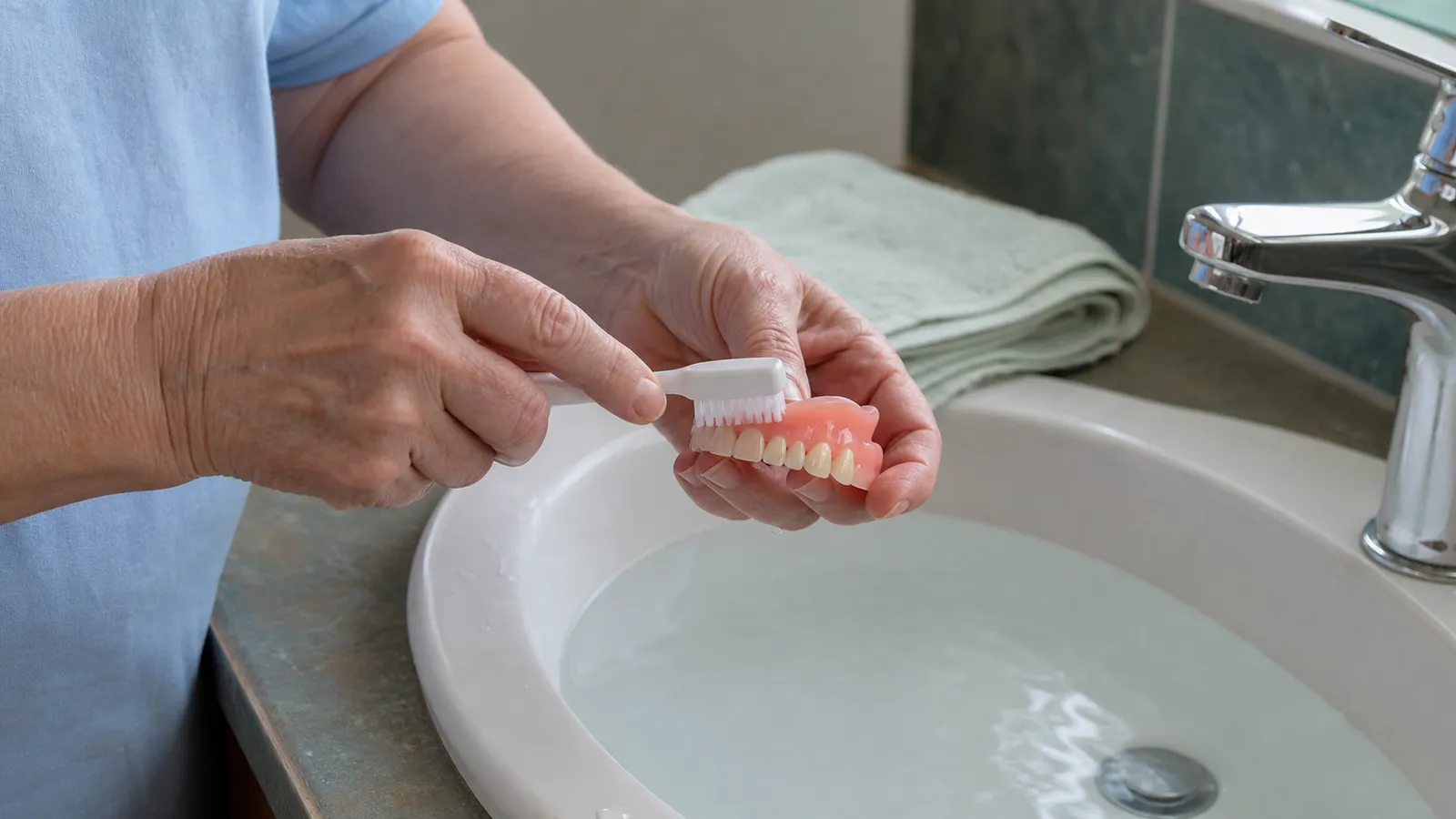
To clean dentures properly, take them out, rinse off food, then brush every surface with a soft brush and denture cleaner or mild soap, and rinse again. Skip regular toothpaste, household cleaners and hot water. At Waterdown Smiles Dentistry in Waterdown, every denture patient gets a daily cleaning and storage routine.
Clean Dentures, Healthy Gums
- Clean your dentures every day, just like natural teeth, to prevent stains, bad breath and gum problems
- Use the right tools: a denture brush or soft toothbrush with denture cleaner or mild soap
- Avoid regular toothpaste, household cleaners and hot water, which can scratch or warp dentures
- Give your gums a rest by taking dentures out at night when your dentist recommends it, and keep them in water
- See your dentist regularly so the fit can be checked and adjusted as your mouth changes
A new set of dentures can give you back the ability to chew, speak and smile with confidence. Keeping them that way comes down to a few minutes of care each day. At Waterdown Smiles Dentistry on Dundas Street East in Waterdown, we explain a daily cleaning and storage routine to every patient who wears full, partial or implant-supported dentures.
This guide covers how to clean dentures properly, step by step, what to avoid, how to store them overnight, and the habits that help your dentures and gums stay healthy for longer.
Why Daily Denture Cleaning Matters
Dentures do not get cavities, but they still collect plaque, food and bacteria. According to the Canadian Dental Association, complete and partial dentures need to be cleaned every day, just like natural teeth.
When dentures are not cleaned well, plaque and tartar can build up on them. That build-up can cause:
- Stains that make dentures look dull or yellow
- Bad breath
- Gum problems under and around the denture
- Cavities and gum disease in natural teeth, because plaque from a partial denture can spread to the teeth it touches
A simple routine prevents all of this, and it only takes a few minutes.
How to Clean Dentures Properly: Step by Step
Whether you need to wash dentures after a meal or give them a full clean at night, the steps are the same.
- Take them out. Remove your dentures from your mouth before you clean them. Cleaning them in place misses the surfaces that touch your gums
- Protect against drops. Stand over a folded towel or a sink partly filled with water. Dentures can break if they are dropped
- Rinse first. Run them under water to wash away loose food
- Brush every surface. Wet a denture brush or a soft-bristled toothbrush and use a denture cleaner or a mild soap. Brush gently, including the inside surface and under any clasps, where bacteria collect
- Be gentle with attachments. Avoid bending clasps or scratching the plastic
- Rinse well again. Rinse in clean water before putting your dentures back in your mouth
If you have been wondering how to clean dentures without damaging them, the key is “gentle and daily,” not “strong and occasional.”
What to Avoid When Cleaning Dentures
Some products that work well around the house are too harsh for dentures:
- Regular toothpaste: the CDA notes it is too abrasive for dentures
- Household cleaners: these are also too abrasive and are not made for anything that goes in your mouth
- Hot water: never soak dentures in hot water
- Rough handling: brushing too hard or squeezing dentures tightly can damage the plastic, bend clasps or crack the denture
How to Care for Dentures Beyond Daily Cleaning
Knowing how to care for dentures goes beyond the brush. These habits help your dentures fit well and keep your mouth healthy.
Clean and Rest Your Gums
While your dentures are out, gently clean and massage your gums. If a toothbrush feels too firm, run it under warm water to soften the bristles, or use a clean, damp cloth wrapped around your finger.
If you wear a partial denture, brush your natural teeth with a soft toothbrush and floss every day. Those teeth help hold your partial in place, so keeping them healthy matters.
Overnight Soaking and Storage
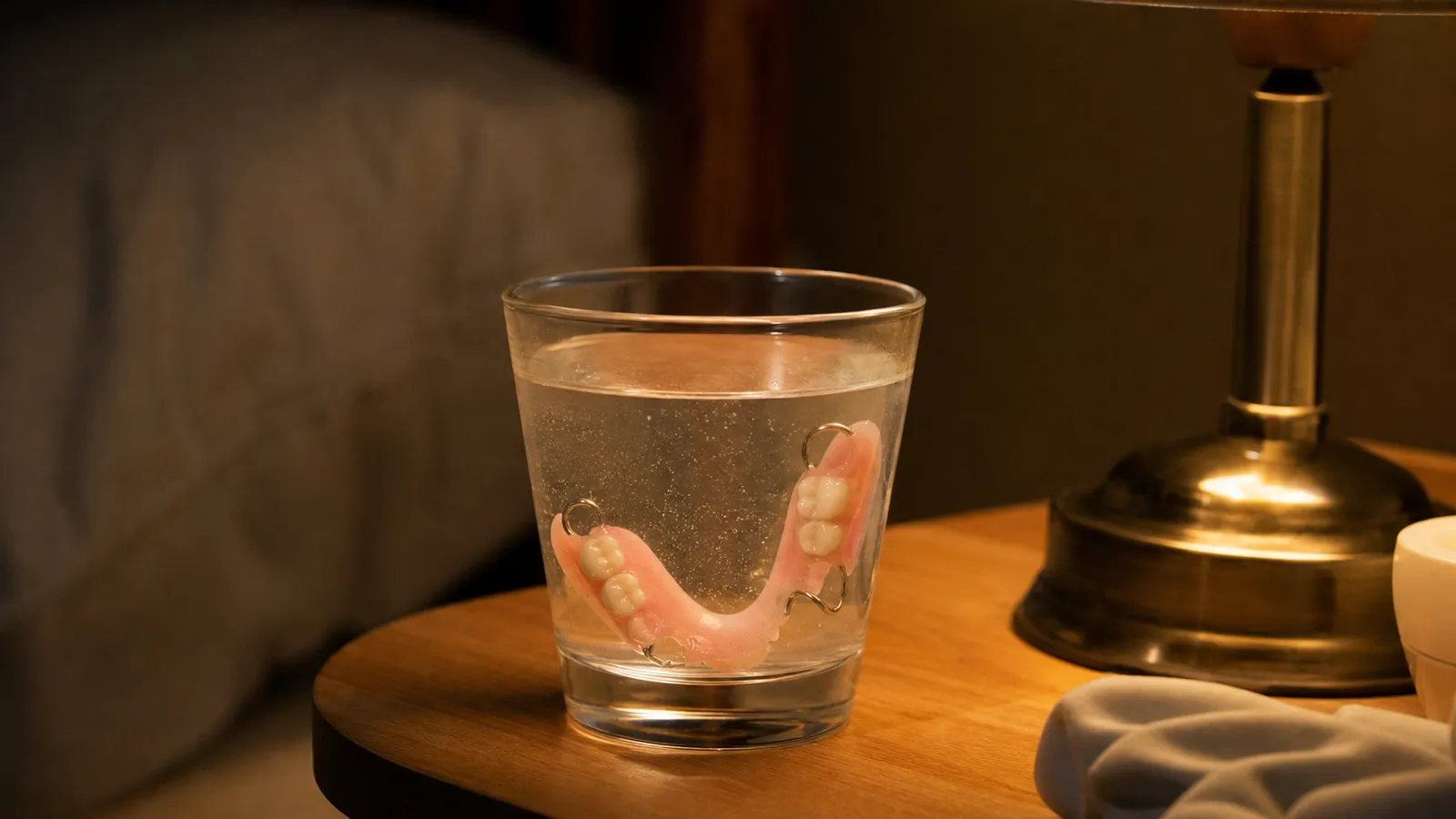
The Canadian Dental Association recommends taking dentures out overnight to give your mouth a chance to rest. At our clinic, we explain whether your type of denture should come out at night, since some dentures are removed overnight for tissue health.
When your dentures are out:
- Keep them in water so they do not dry out or lose their shape
- Soak them in warm water, with or without a denture cleanser
- Never use hot water for soaking
- Metal clasps? Soak partials with metal clasps in plain warm water only, because other soaking solutions can tarnish the metal
Check for Cracks and Changes in Fit
Look over your dentures as you clean them. If you notice a crack, a chip or a loose tooth, bring them in for repair rather than fixing them at home. Our dentures in Waterdown page explains what to do if a denture breaks.
Your mouth also changes over time. The bone and gums under a denture can change shape, which affects how it fits. Dentures may need adjustments or a reline now and then to stay comfortable.
Cleaning Partial, Full and Implant-Supported Dentures
The basic routine works for every type, but each one has a few details to keep in mind.
Partial Dentures
Partial dentures replace some missing teeth and attach to your natural teeth. Pay extra attention to the clasps, where food and plaque collect, and to the natural teeth they hold onto. Our partial and full dentures in Waterdown page compares the options, including acrylic, metal-frame and flexible partials.
Full Dentures
Full dentures replace all the teeth in an upper or lower arch. Brush the whole surface, including the part that rests against your gums, and clean and massage your gums while the denture is out. If a denture adhesive is right for you, we explain how to use it during your fitting.
Implant-Supported and Snap-On Dentures
Implant-supported dentures attach to dental implants. The denture itself is cleaned with the same gentle routine, but the implants and the gums around them need their own care. We give you specific instructions for your implant-supported denture. You can also learn more about caring for implant restorations in our guide on how long dental implants last.
How to Sanitize Dentures Without Damaging Them
Many people want to sanitize dentures, especially if they have started to smell. The safest approach is simple: daily brushing with a denture cleaner or mild soap, plus an overnight soak in warm water with a denture cleanser, removes the plaque that bacteria live in.
Avoid household cleaners and disinfectants. They are too harsh for dentures and are not meant for anything that goes in your mouth. If your dentures still smell or look stained after a careful routine, bring them to your next visit so we can check them.
Regular Checkups Still Matter With Dentures
Wearing dentures does not mean you can skip the dentist. The CDA advises seeing your dentist regularly and at least once a year. Here is why:
- Fit: dentures may need adjusting or relining to keep fitting well
- Sore spots: poorly fitting dentures can cause sores, and those sores can make oral cancer harder to spot
- Gum and tissue health: your dentist checks your gums for signs of disease or oral cancer
- Natural teeth: if you wear a partial, your remaining teeth are checked for decay or infection
Every dental exam at our clinic includes a gum health assessment and an oral cancer screening in Waterdown, and follow-up visits for denture adjustments are booked as needed.
If you are wondering whether the Canadian Dental Care Plan can help with the cost of dentures, our upcoming guide on whether CDCP covers dentures explains how coverage works.
FAQs About How to Clean Dentures Properly
How do partial dentures stay in place?
Most partial dentures are held in place by clasps that fit around nearby natural teeth. That is why the natural teeth under and around a partial need daily brushing and flossing. Some partial dentures can also be supported by dental implants, which your dentist can discuss with you.How to sanitize dentures?
Brush your dentures every day with a denture brush or soft toothbrush and a denture cleaner or mild soap, then soak them overnight in warm water with a denture cleanser. If your partial has metal clasps, soak it in plain warm water instead. Avoid household cleaners and hot water, which can damage dentures.How to whiten dentures?
The best way to keep dentures white is to stop stains from building up: clean them every day and soak them overnight. Do not use regular toothpaste or household cleaners to scrub stains away, because they are too abrasive. If stains remain, bring your dentures to your dentist to have them checked.What denture cleaner should I use?
Use a cleaner made for dentures, or a mild soap, with a denture brush or a soft-bristled toothbrush. Regular toothpaste and household cleaners are too abrasive. For partials with metal clasps, use plain warm water for soaking, because some soaking solutions can tarnish the metal.Want Your Dentures to Look and Feel Their Best?
Unsure whether your cleaning routine is working, or noticing a change in fit? A quick visit can help.
- A daily cleaning and storage routine explained for your type of denture
- Full, partial, flexible and implant-supported dentures, with adjustments and follow-up visits when needed
- Every exam includes a gum health assessment and an oral cancer screening
Book online or visit Waterdown Smiles Dentistry at 255 Dundas St E, Unit 17, Waterdown, to have your dentures checked or to ask about dentures in Waterdown.